Lesson Plans

Bring the benefits and surprises of nature to life! Immerse your students in the fascinating world of nature and science with interactive lessons. Each lesson plan is available as a PDF with a related interactive presentation to use to engage your students.

Renewable Energy

1

In this lesson, students will learn why there is a need to explore renewable energy sources by researching how wind and solar energy work and analyzing the pros and cons of each as renewable energy sources.  Students then act as residents of different regions in the U.S. trying to decide if and where they should locate a wind farm and/or solar farm in a specific area.  During the decision making process, students explore factors that are considered when proposing renewable energy for a region (e.g., avoid disrupting ecologically sensitive areas and important wildlife habitat) and make a recommendation based on their evaluation.  The lesson includes the use of wind and solar maps from the National Renewable Energy Laboratory to support students’ investigations.

How Dirt Works

2

Students learn about the value of soil as a natural resource (regulates water, sustains plant and animal life, filters pollutants, cycles nutrients and supports structures). Then explore the importance of having/maintaining healthy soil.  They will explore how different individuals describe healthy soil  (to an agriculturalist means highly productive land that sustains or enhances productivity therefore enhancing profits; to consumer it means plentiful, healthy and inexpensive food for present and future generations; to environmentalist it means functioning at its potential in an ecosystem with respect to biodiversity, water quality, nutrient cycling, and biomass production).

Reforestation: Impact on Climate

2

Students will learn about the importance of large-scale forest landscapes and the impacts of deforestation and reforestation with a focus on global climate change.  By taking a tour through the Sichuan Province in China, students will see the affects deforestation causes and learn how this area is striving to regain its’ forests by launching an extensive reforestation project.  Focus will be given to the carbon cycle and the ways in which forests decrease carbon dioxide and greenhouse gases in the atmosphere, thereby minimizing climate change, and improve air quality.  This lesson will also cover the ways in which deforestation and forest restoration affect wildlife.

The Value of Ecotourism

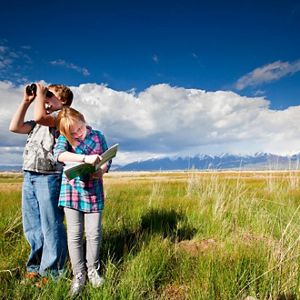
White people using binoculars to look out over grassland from a Jeep
2

Students explore the trade-offs between ranchers keeping land for cattle and ecotourism versus selling land to a large agribusiness. They consider which economic choices help ranchers make the most money from their land in both the short and long term.

Fighting Fire with Fire: Can fire positively impact an ecosystem?

A man in firefighters gear sets fire to an open field of dry grass.
3

Students distinguish between a wildfire and a controlled burn, also known as a prescribed fire. They explore multiple controlled burn scenarios and the positive impacts of fire on ecosystems.

Population Management

Two white cows graze in front of mountains
3

Students learn the science of how managing cattle herd size and grazing rights benefit the cattle and wildlife populations in Kenya.


Urban Trees

3

Students will learn how trees are an essential part of our lives with a focus on the role they play in urban areas, including energy considerations.  They will be introduced to the threats posed to trees, including non-native insects, domestic animal waste, and erosion.  Students then evaluate the potential impact of local tree conservation efforts and design a plan for their community.

Bee Detective - Discover the Culprit Behind Declining Bee Populations

A bee hovers above purple flowers
4

Learn about the features of a honeybee colony and potential causes of colony collapse disorder (CCD).

Managing Salmon to Support Healthy Forests

Salmon attempt to jump up a waterfall.
5

Test a simple interactive population model to estimate sustainable salmon harvest. Simulate variation in nutrient input by comparing growth of plants with different concentrations of fish-based fertilizer control.

How Natural Areas Filter Water

A river flows through a forest and over rocks
6

Students learn about the importance of water quality for human health and agriculture. They conduct a simple lab activity to demonstrate how natural areas filter water better than paved areas.

Pages